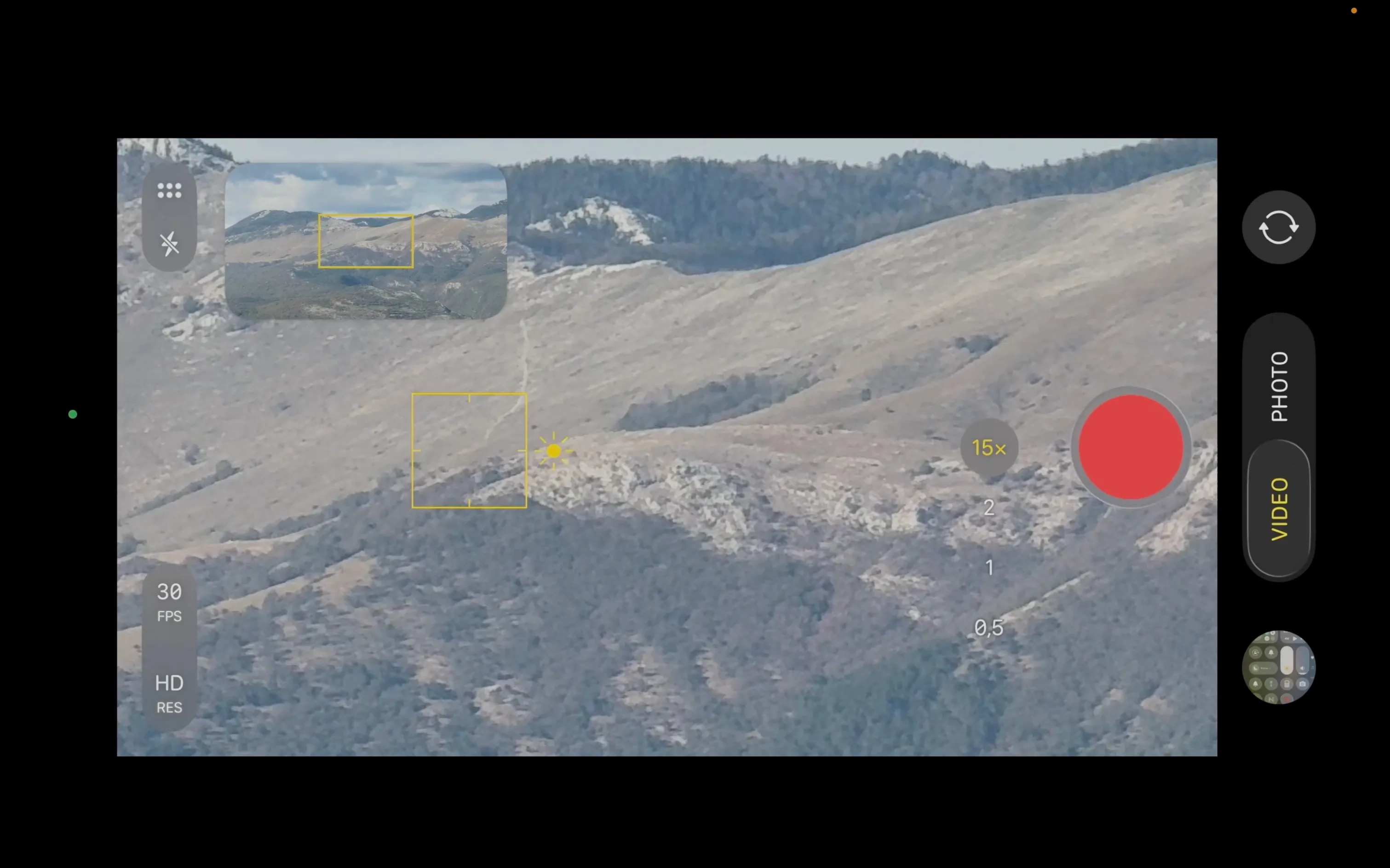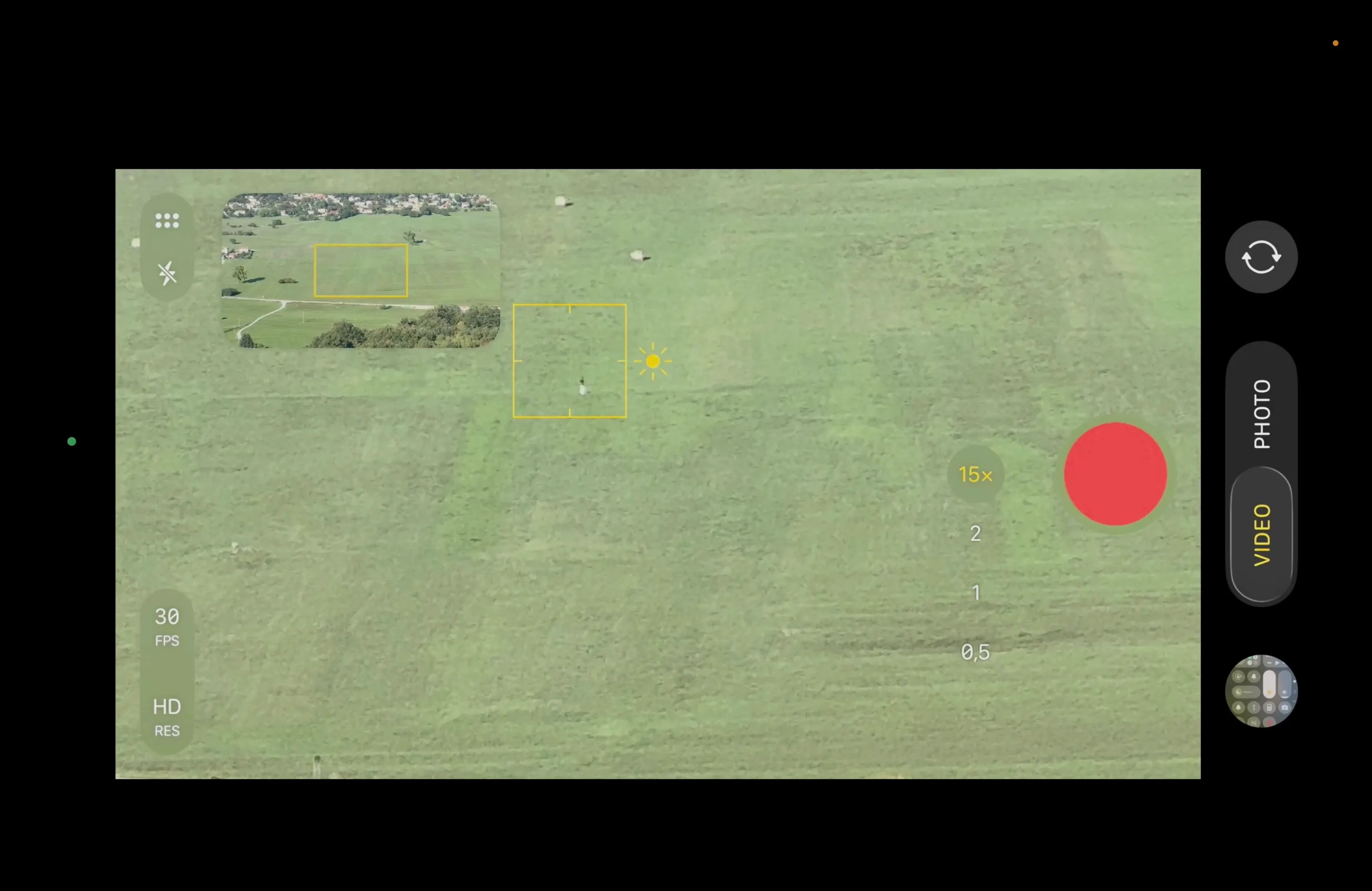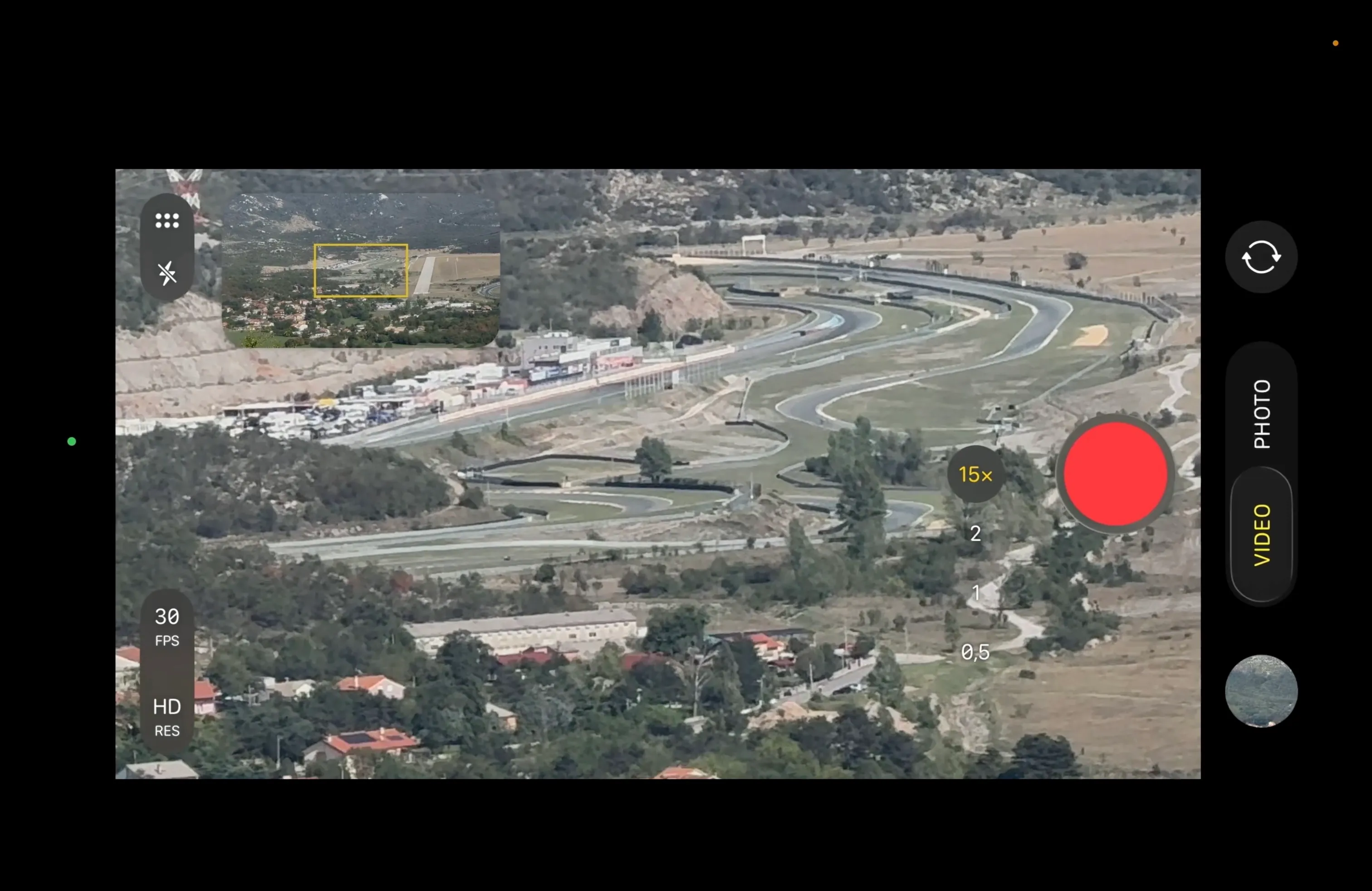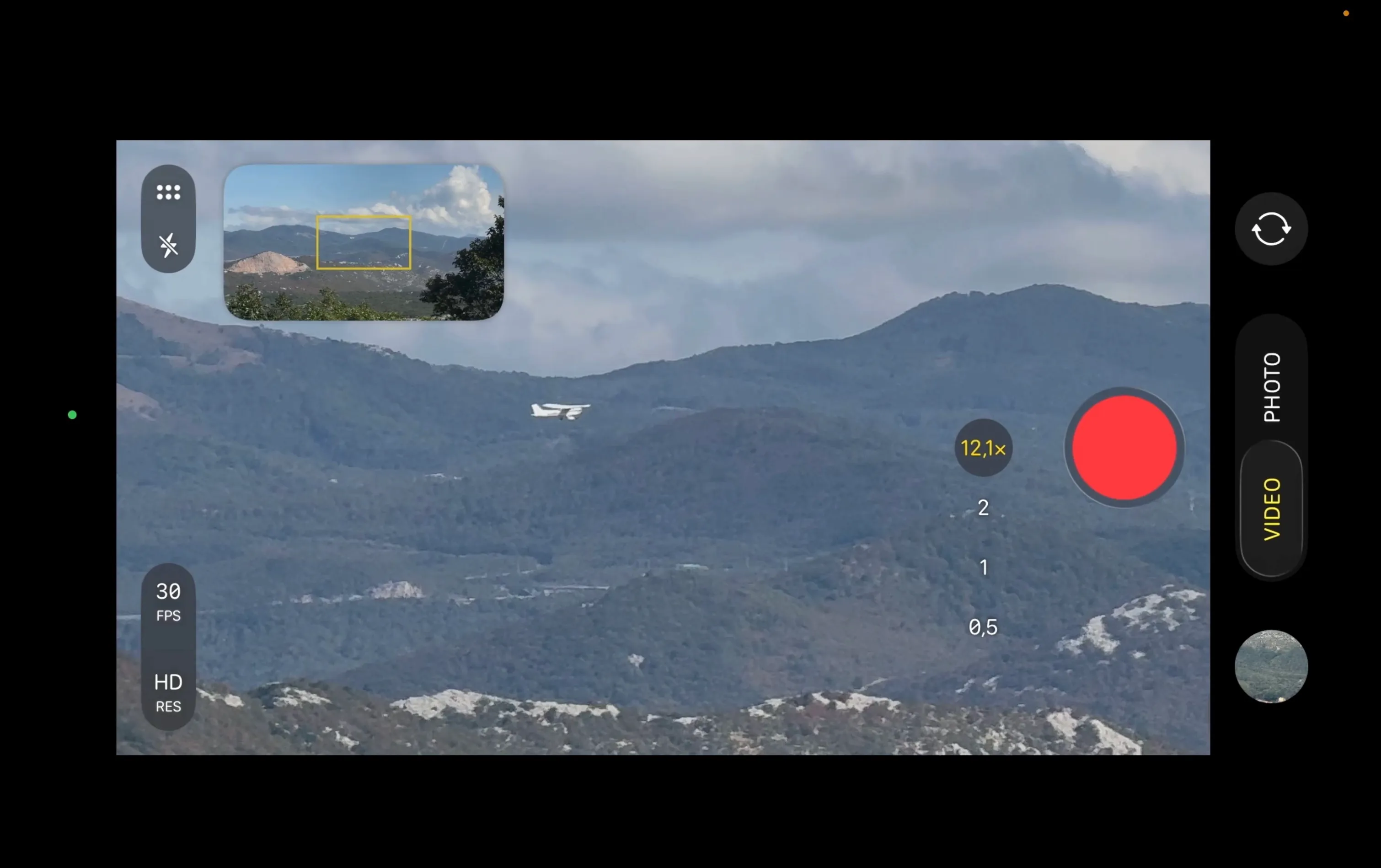

Developed during an art colony at Grobnik Castle, the work explores the possibilities and limitations of screen recording as a recording technique, drawing on the specific characteristics of the location, including the sounds of motor vehicles on the motorway, the nearby airfield, Grobnik Circuit, the buzzing of flies, church bells, fragments of a church service, and the sound of the wind.
This technique does not allow for manipulation during either recording or editing. The video lasts exactly as long as the recording itself, a duration made visible by the information displayed in the corners of the screen: the clock, date, start and end times of the recording, and even the signal strength. By employing screen recording, the work becomes a document of time. Consequently, the final work takes the form of a screen recording of a computer interface on which a screen recording of a mobile device interface is played back. The mobile device records its own interface while its camera remains inactive; only the screen itself is being recorded. The video footage captured at the location is occasionally played back at an accelerated speed. Due to the 15× magnification of the image and the handheld movement of the camera, the opening of the work resembles a nature documentary from a bygone era. Swarms of gnats and birds appear as visual disturbances within the image, resembling the noise characteristic of footage recorded with a VHS camera. However, as the camera moves rapidly across the landscape, it becomes clear that the footage depicts the present day: the quarry, magnified sections of the motorway and surrounding roads, the airfield, and the extent of the area’s development all point to the contemporary moment.
The graininess of the image at 15× magnification, combined with the camera’s movements and intermittent pauses, evokes the experience of observing a scene through binoculars, moving through a video game, or navigating a virtual landscape in Google Earth. As the viewing angle shifts across the magnified landscape of Grobnik Field (Plain), different segments of the field come into view, revealing animals, people, buildings, and cars that happen to fall within the frame at that particular moment. Throughout the work, the artist observes the current state of the field and the purposes for which it is used today, as well as its impact on the surrounding area. In doing so, she seeks to answer a question she poses to herself: How does Grobnik Field live today?