

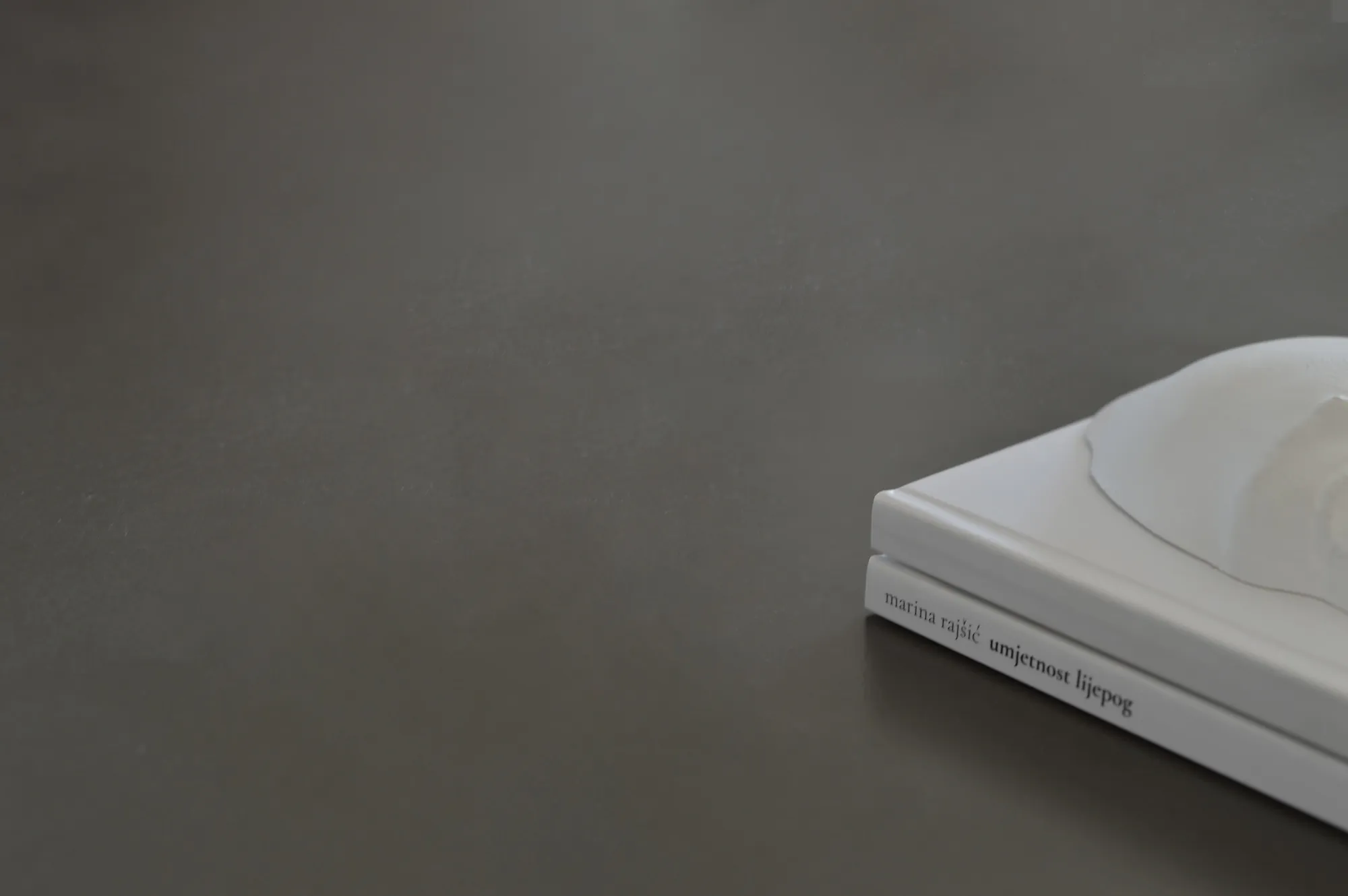
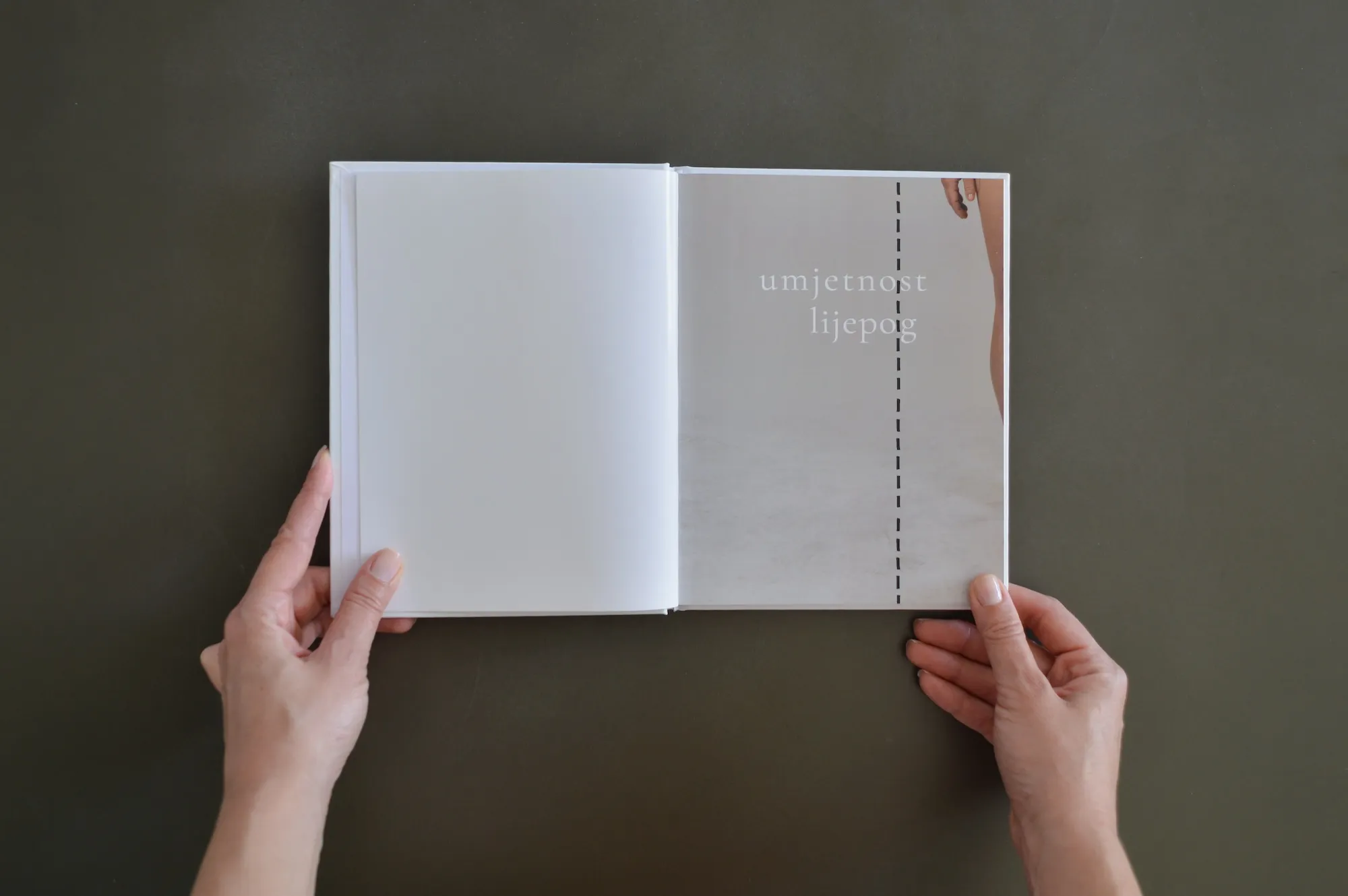
The book follows the concept of the photograph above, given that the photograph is the starting point of the whole project that encompasses all of the artwork presented on the exhibition as well as the artist’s book. Author’s solo exhibition systematically and problematically questions the possibility of (re)defining the notion of (women) beauty. It is a student project under the title of „Artifice of Beauty“, that, through visual marks, continuously compares the historical/philosophical thought with the modern, subjective/artistic and cultural way of looking at the female body.
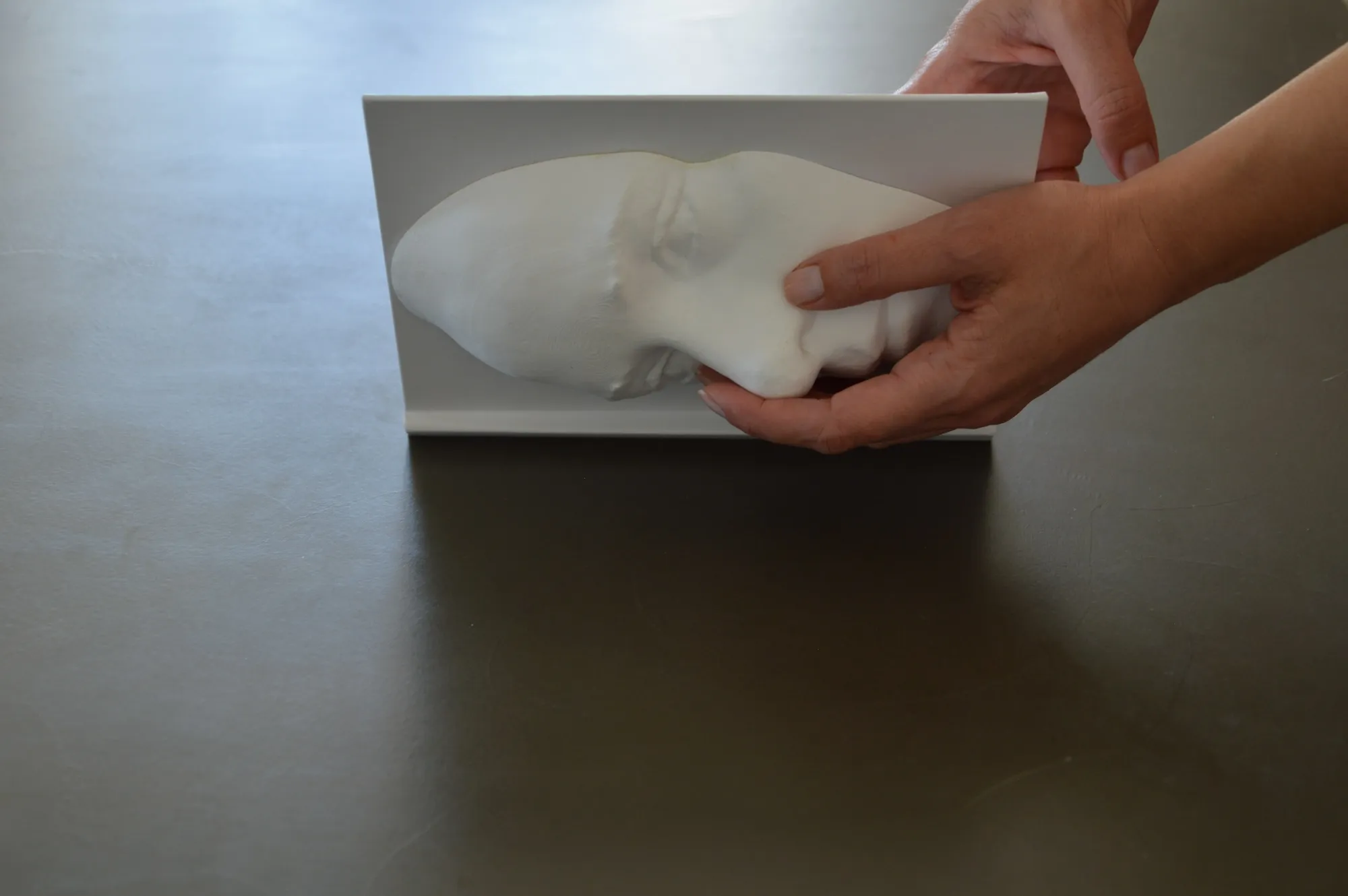
Through photography (Woman’s nude in natural size: 200x100cm), digital print in the form of an artist’s book (Artifice of Beauty) and interactive artistic installations (porcelain lamp and a sculpture with a silhouette of the „perfect“ proportions of a female body) the function of the project is situated within the broader context of social communication achieved through digital networks, that on a subliminal level forge new trends and consequently extend the waiting lists for plastic surgery.
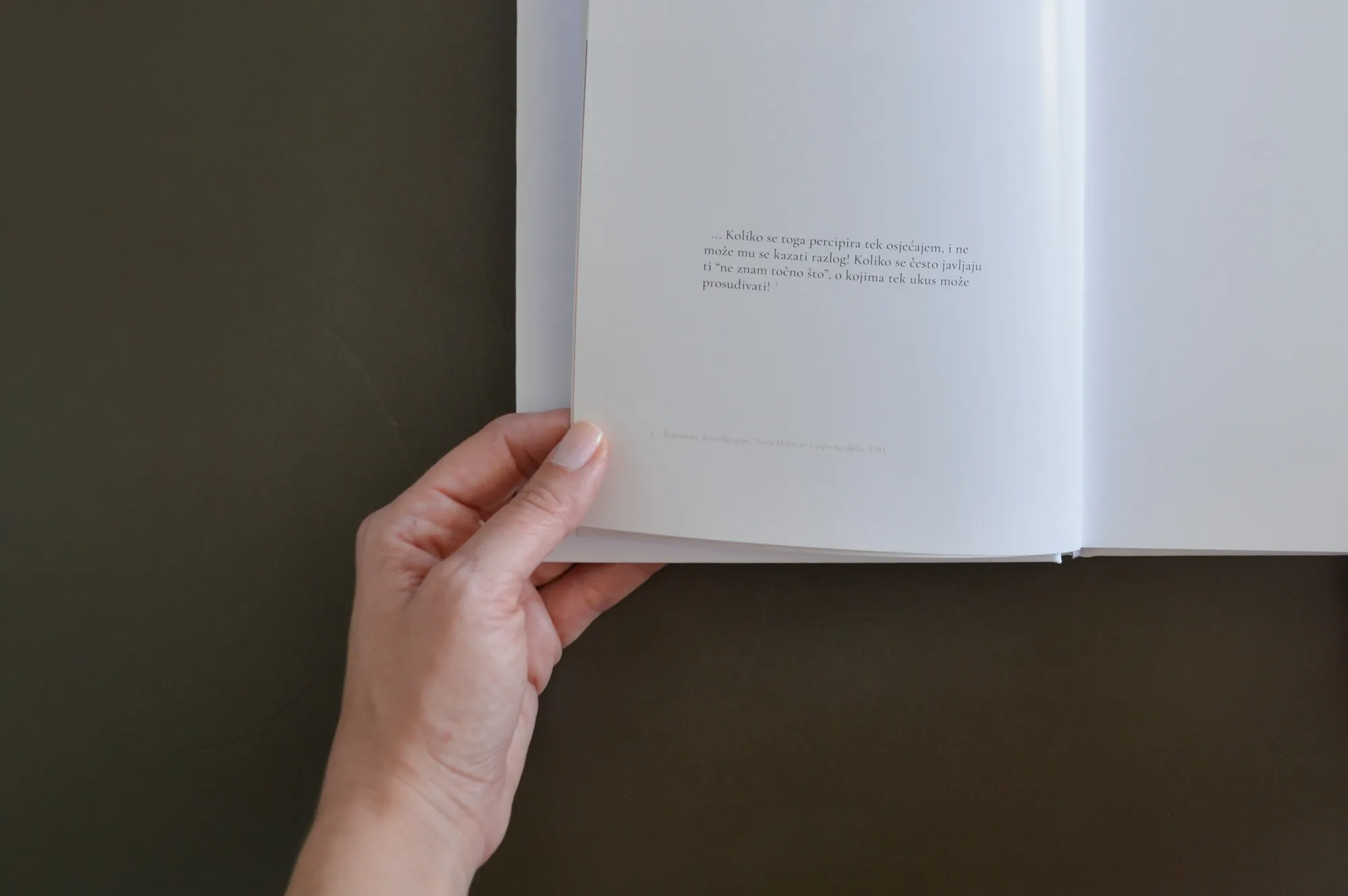
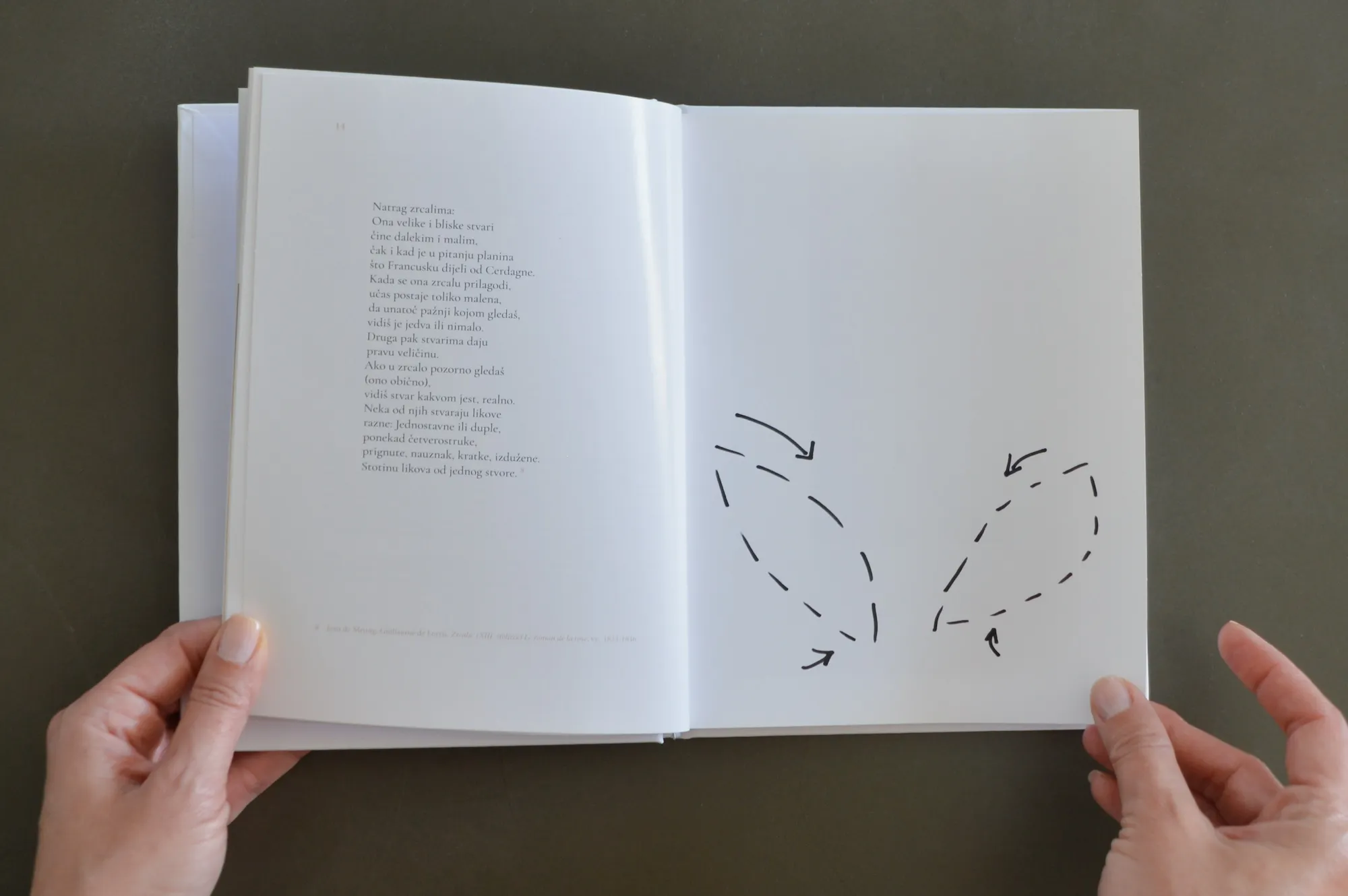
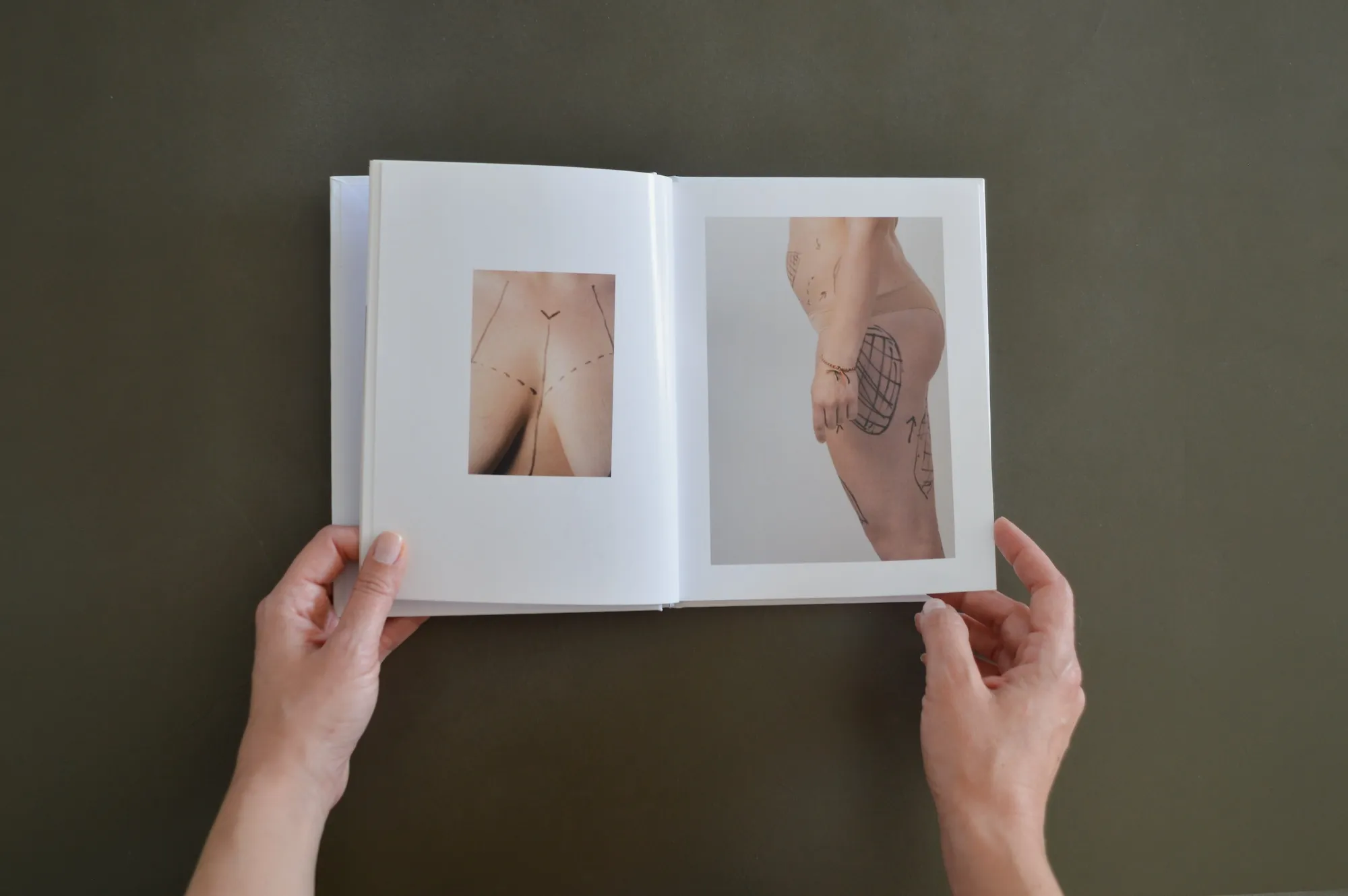
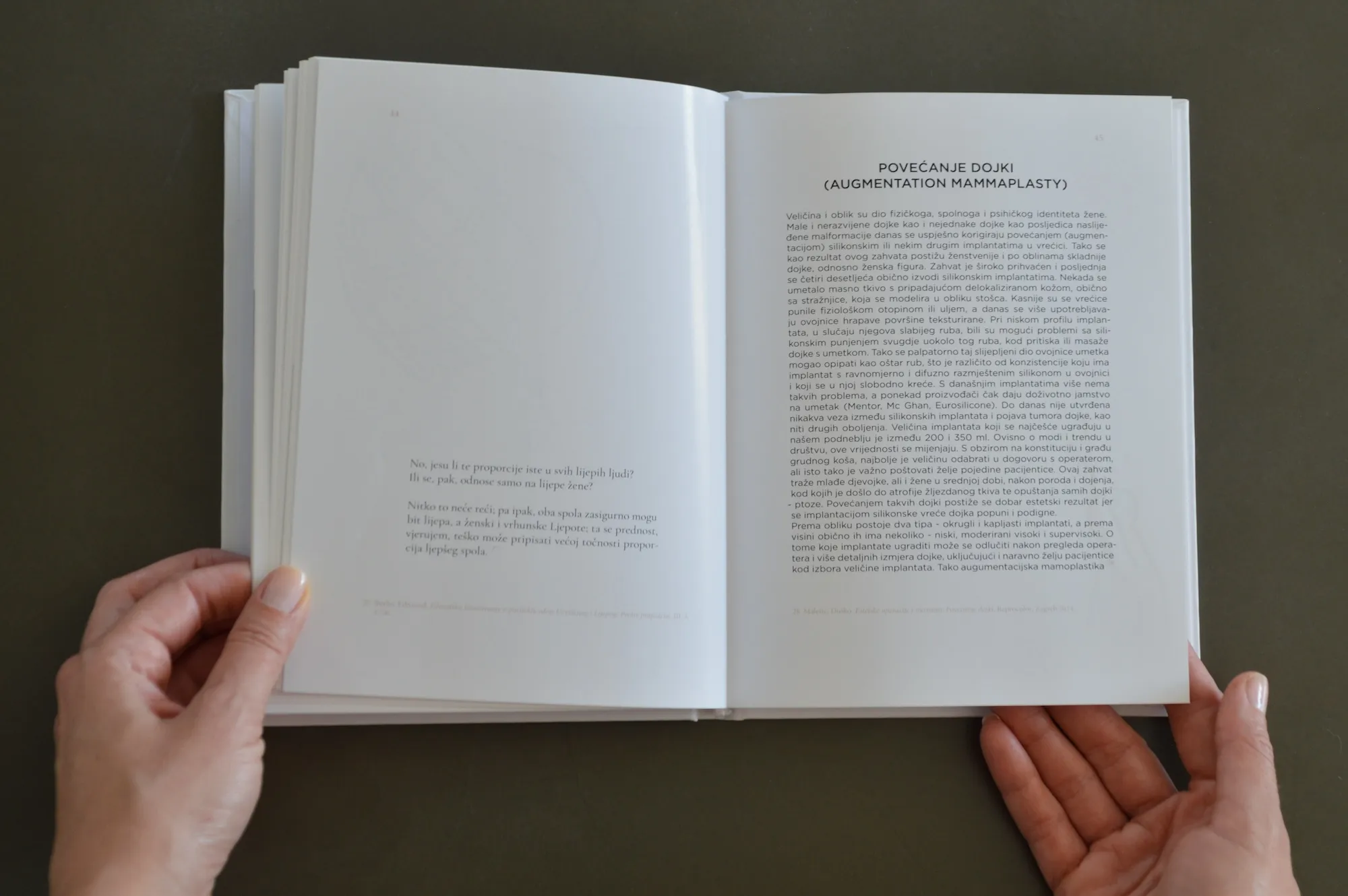
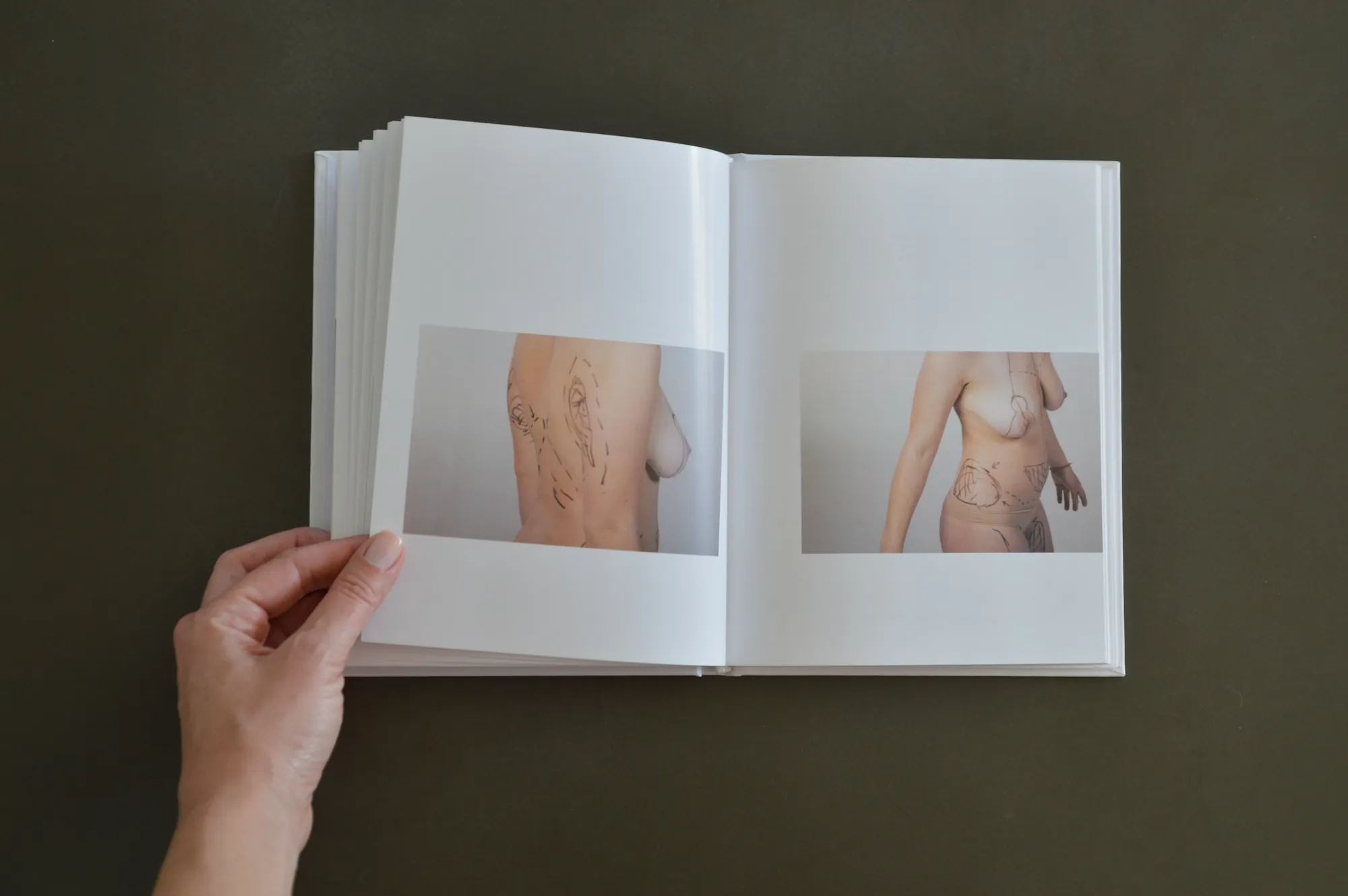
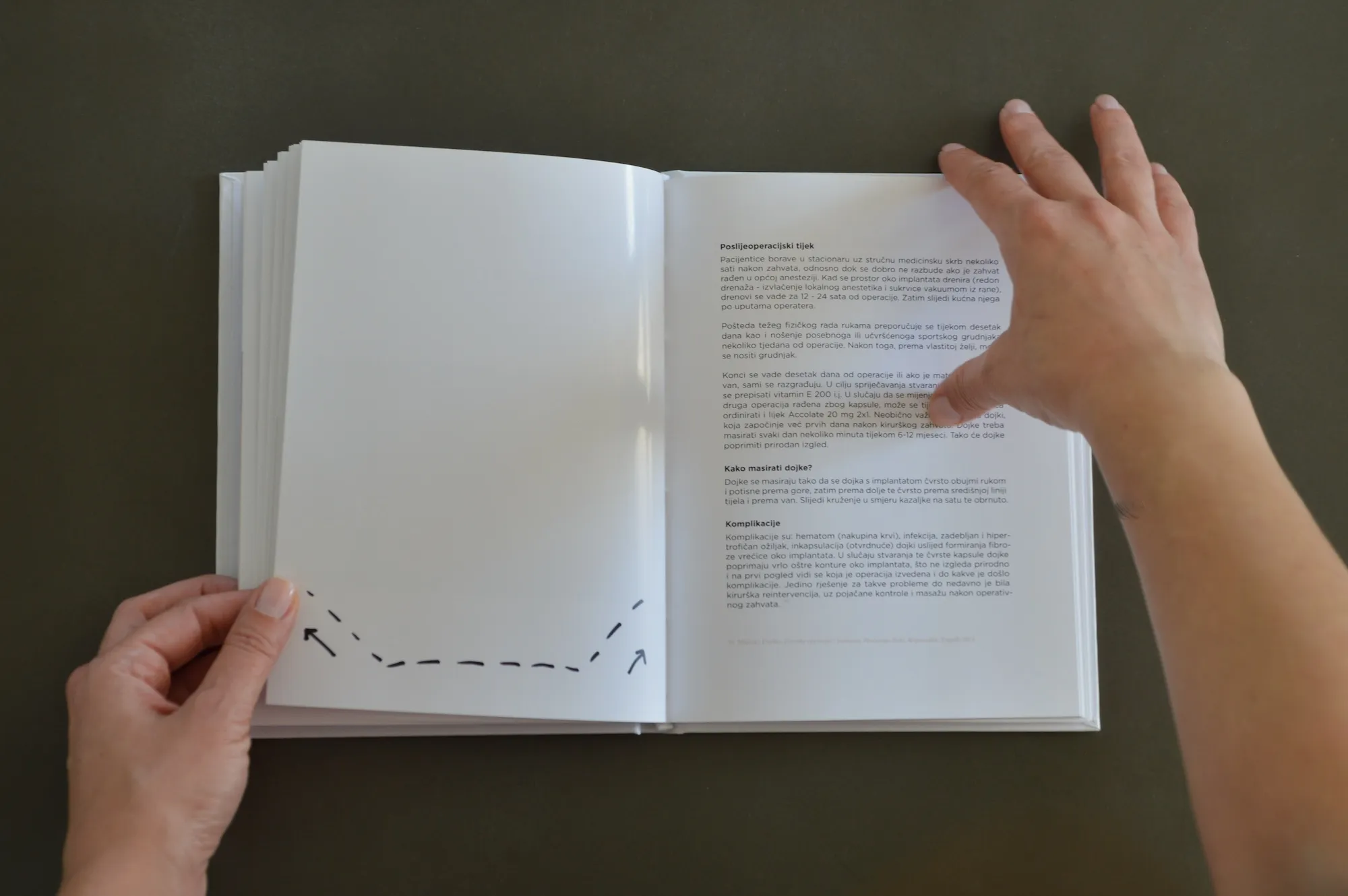
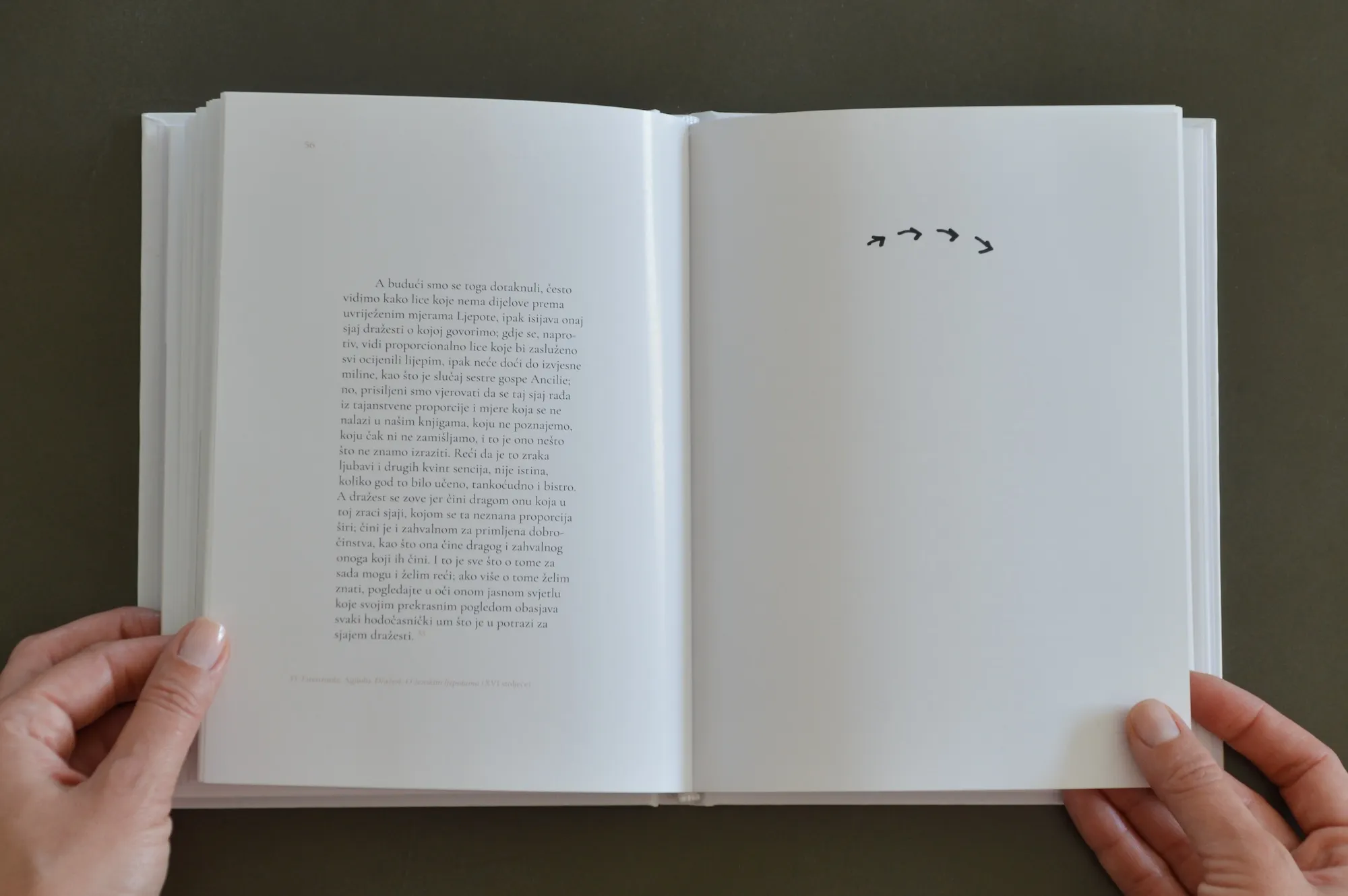
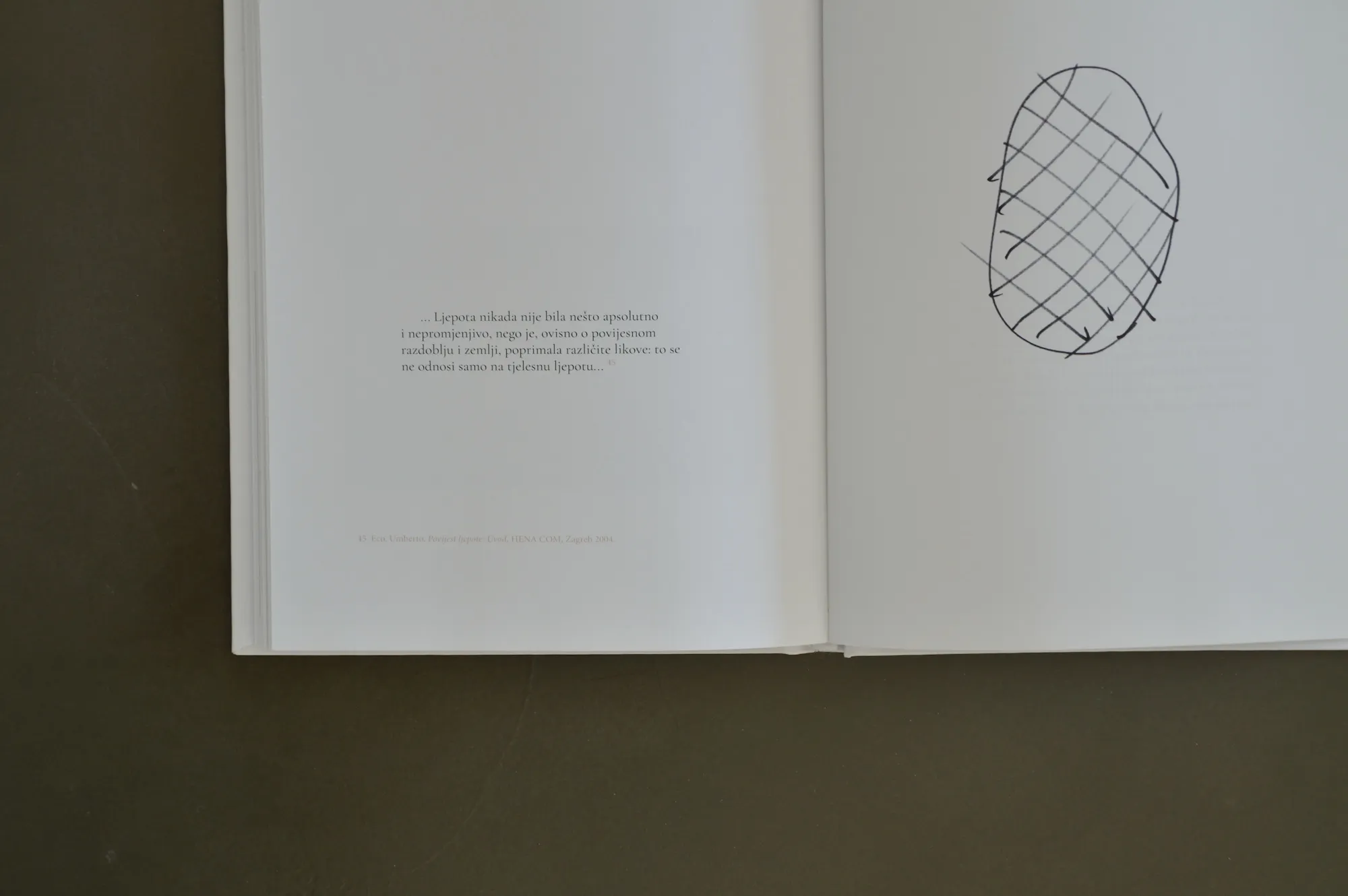
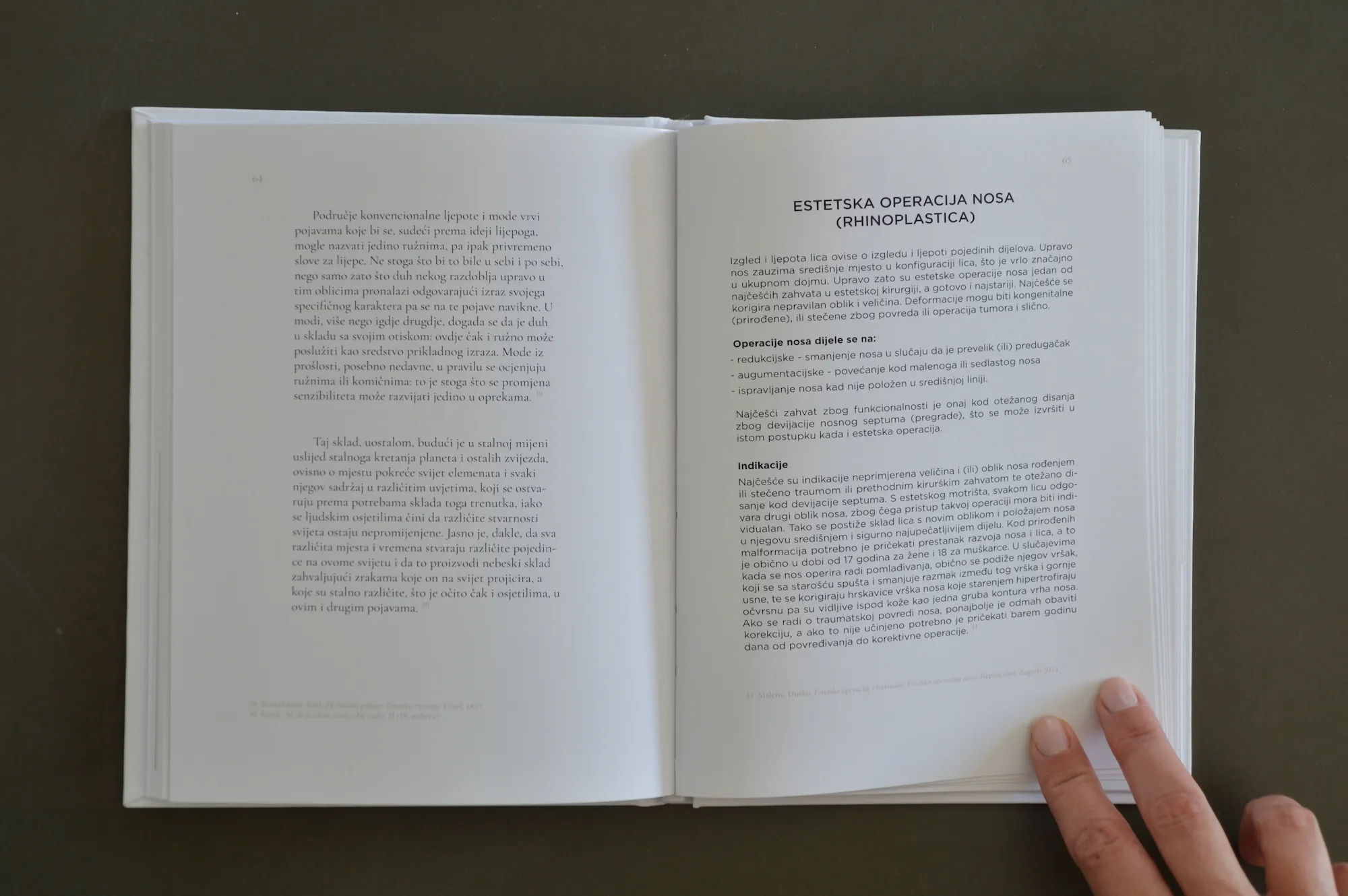
As a subliminal message also exists the artist’s book, in which photographs of the female body (marked with aesthetic surgeon drawings) and texts that present a compilation of thoughts from Plato, Sappho and Charles Baudelaire; as a discussion about aesthetic surgery, that represents the conceptual starting point of the whole exhibition:
… Beauty was never something absolute and static, in contrary, depending on the historical context and culture, was given different meanings: that doesn’t refer only to physical beauty…
— Eco, Umberto. History of Beauty: Introduction, HENA COM, Zagreb 2004.
Justice, art and everything else that is precious to the soul, have no value in today’s copies. Only a few, with their weak organs, approaching these copies, barely see the original that is visible.
— Plato, Fedar xxx: Shine, (V.–VI. st. pr. Kr.)
Marina Rajšić artworks are articulated as an interesting junction of text, different artistic media and visual contradictions, while presenting to us a request to (re)define the term of beauty as well as philosophical categories which we broadly use in a modern technological chaos.
— Ana Žarković, art historian
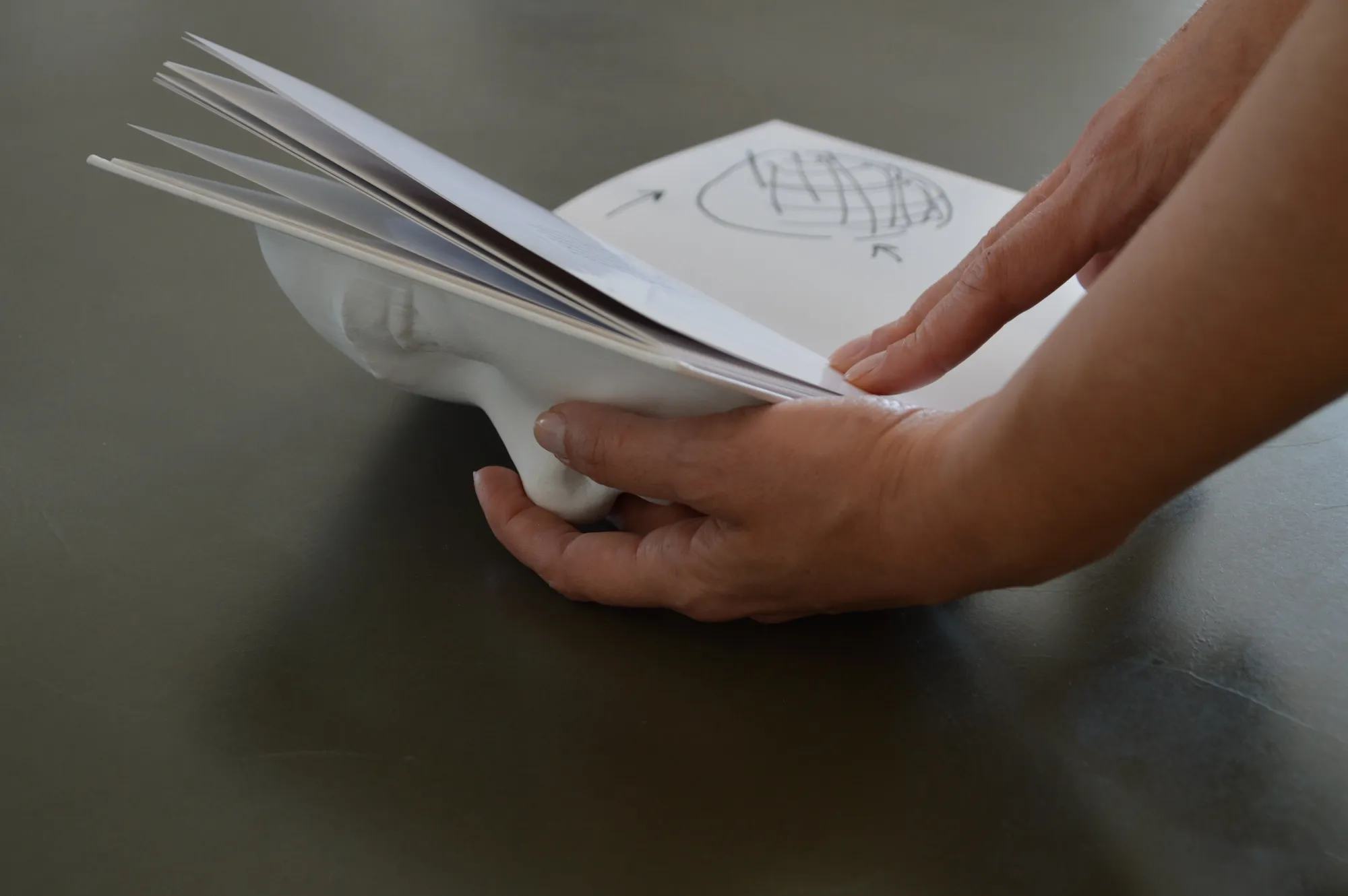
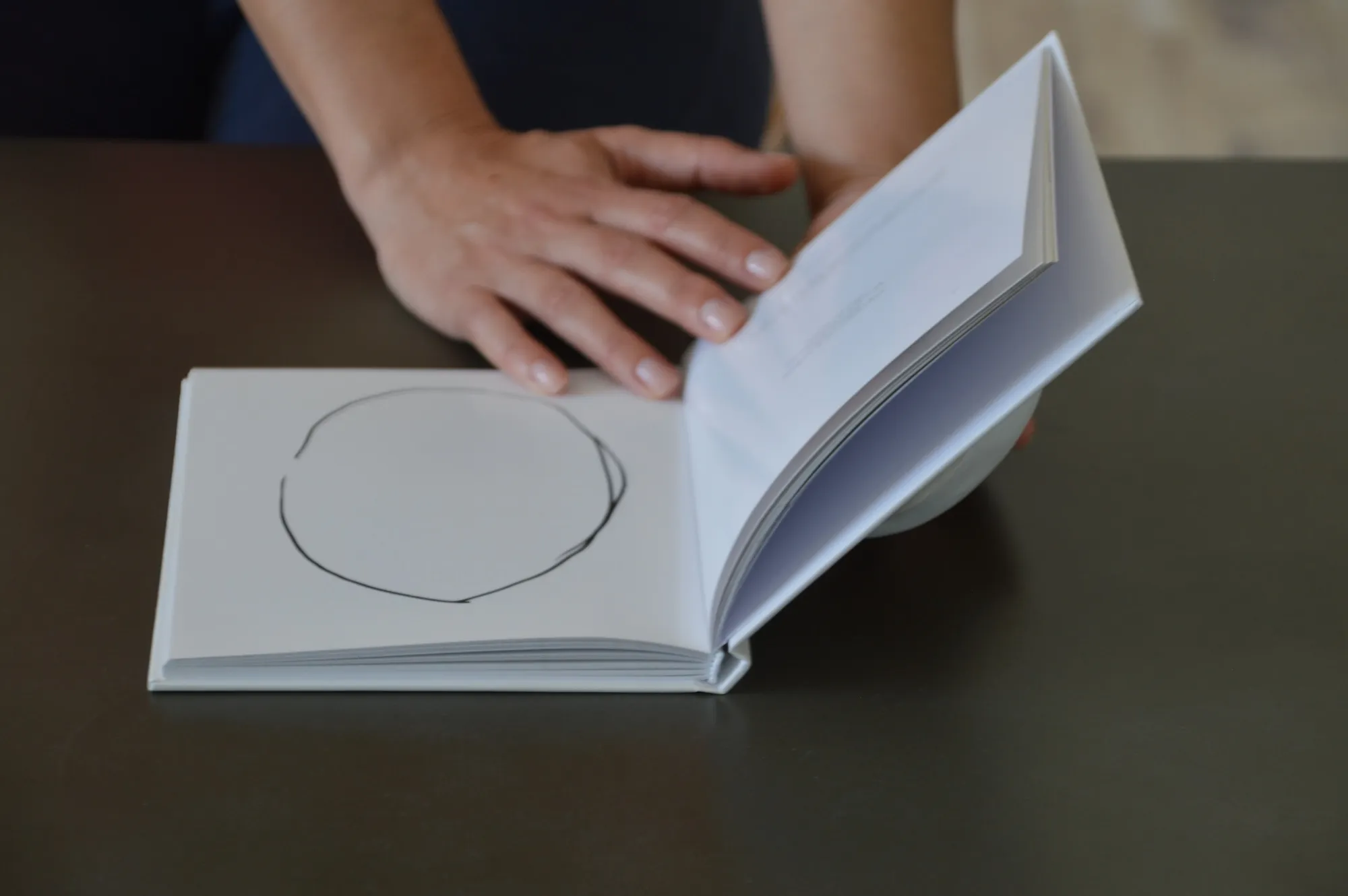
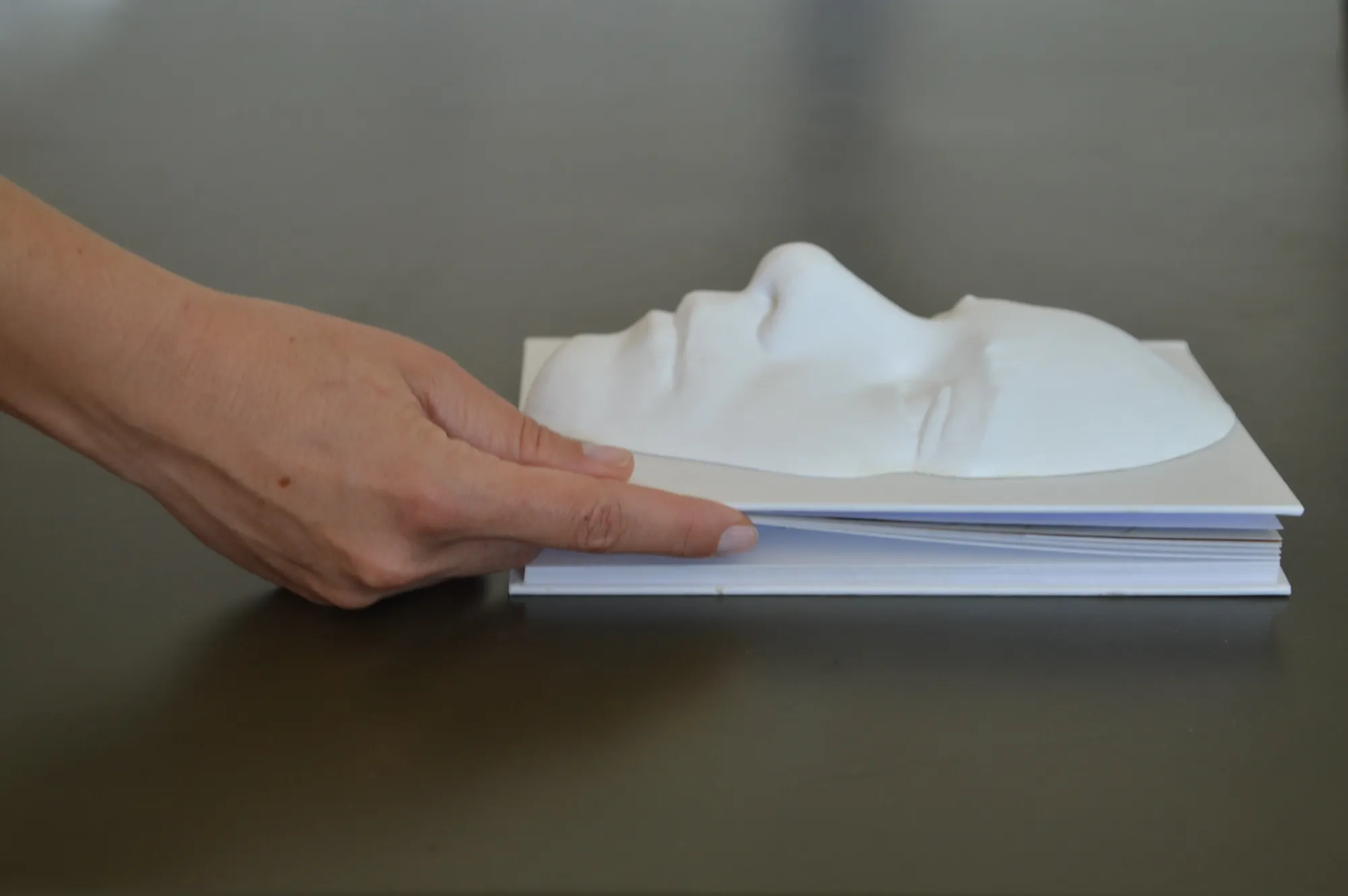
The work was made with the support of Student Cultural Centre (SKC) of the University of Rijeka.
Croatian title
Umjetno(st) lijepo(g)